Journal

The Flâneur: Plečnik House, Ljubljana

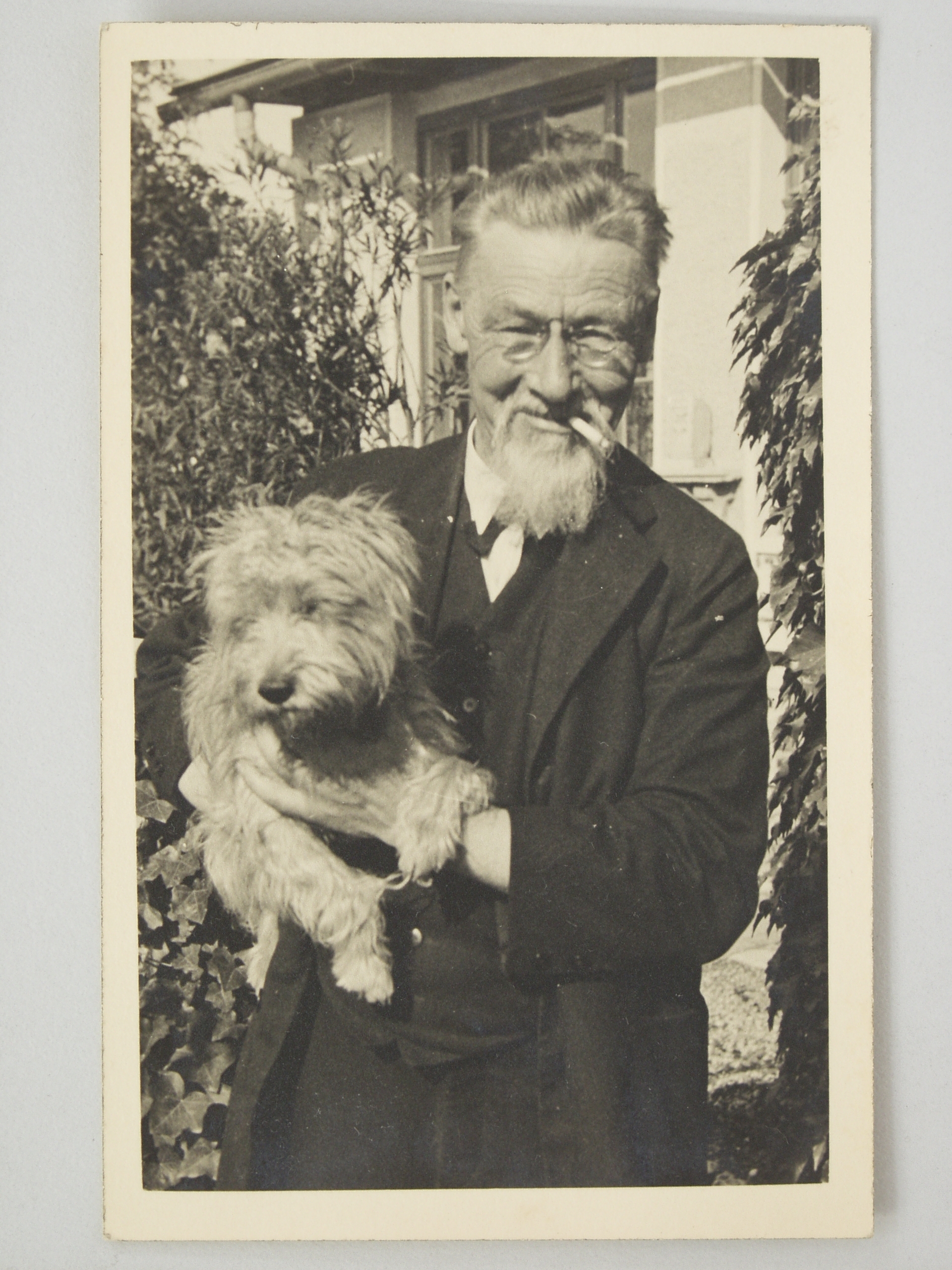
“A tower, a mule, me and the garden.” That is how Jože Plečnik (1872–1957) imagined his life. In 1921 he returned to Ljubljana. He had trained in Vienna under Otto Wagner and, the year before, been appointed by President Masaryk as chief architect of the Prague Castle renovation. He took up a professorship at the newly established Department of Architecture in Ljubljana while continuing the Castle work. He realised the vision at 4–6 Karunova Street in Trnovo, aside from the mule. 1925 brought the cylindrical tower, with views of his beloved garden. After he bought the neighbouring property he added the garden, and then the winter garden in 1929–30. The house is preserved as he left it in 1957.
The Flâneur: Plečnik House, Ljubljana

01.

The House

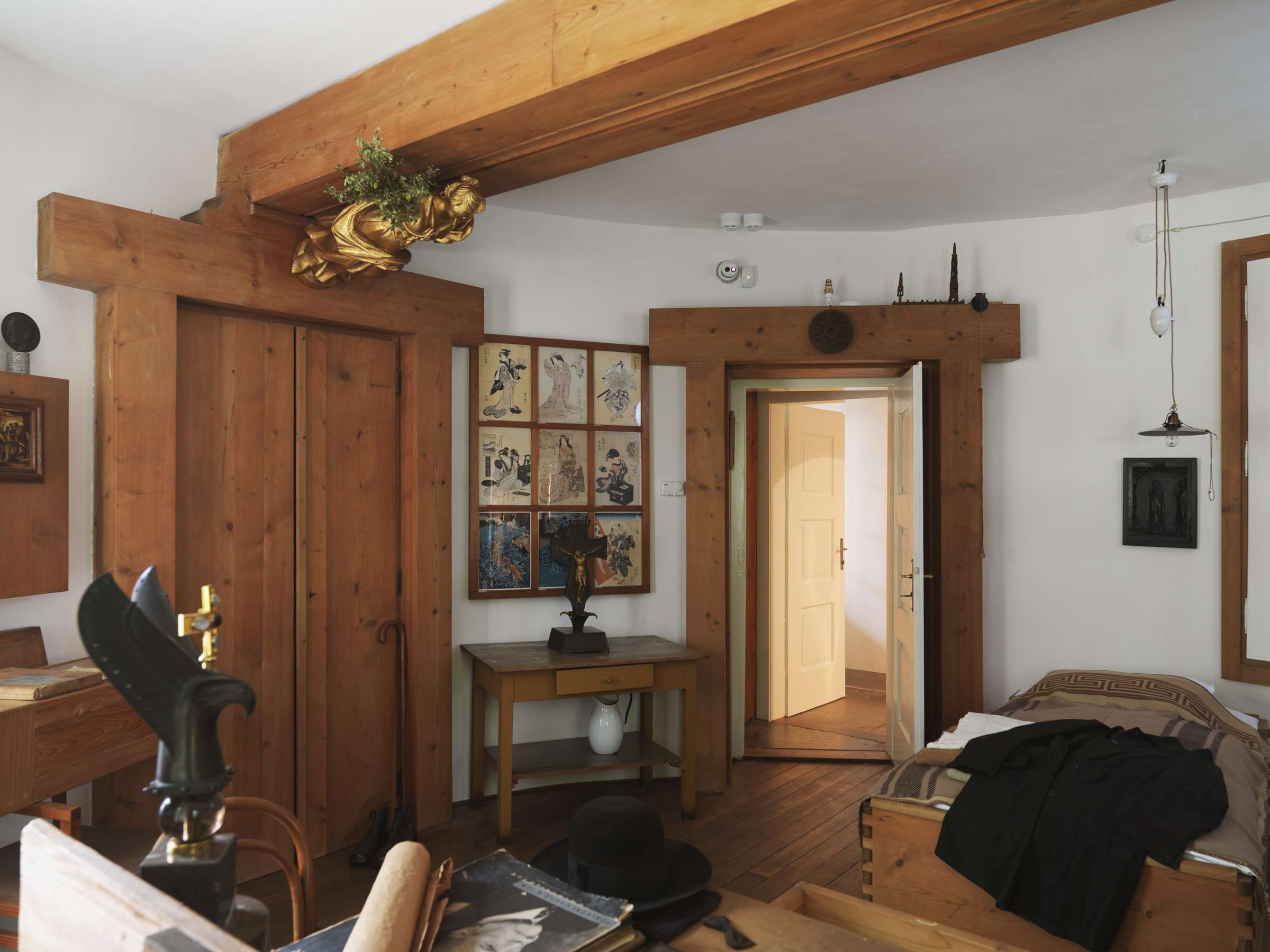
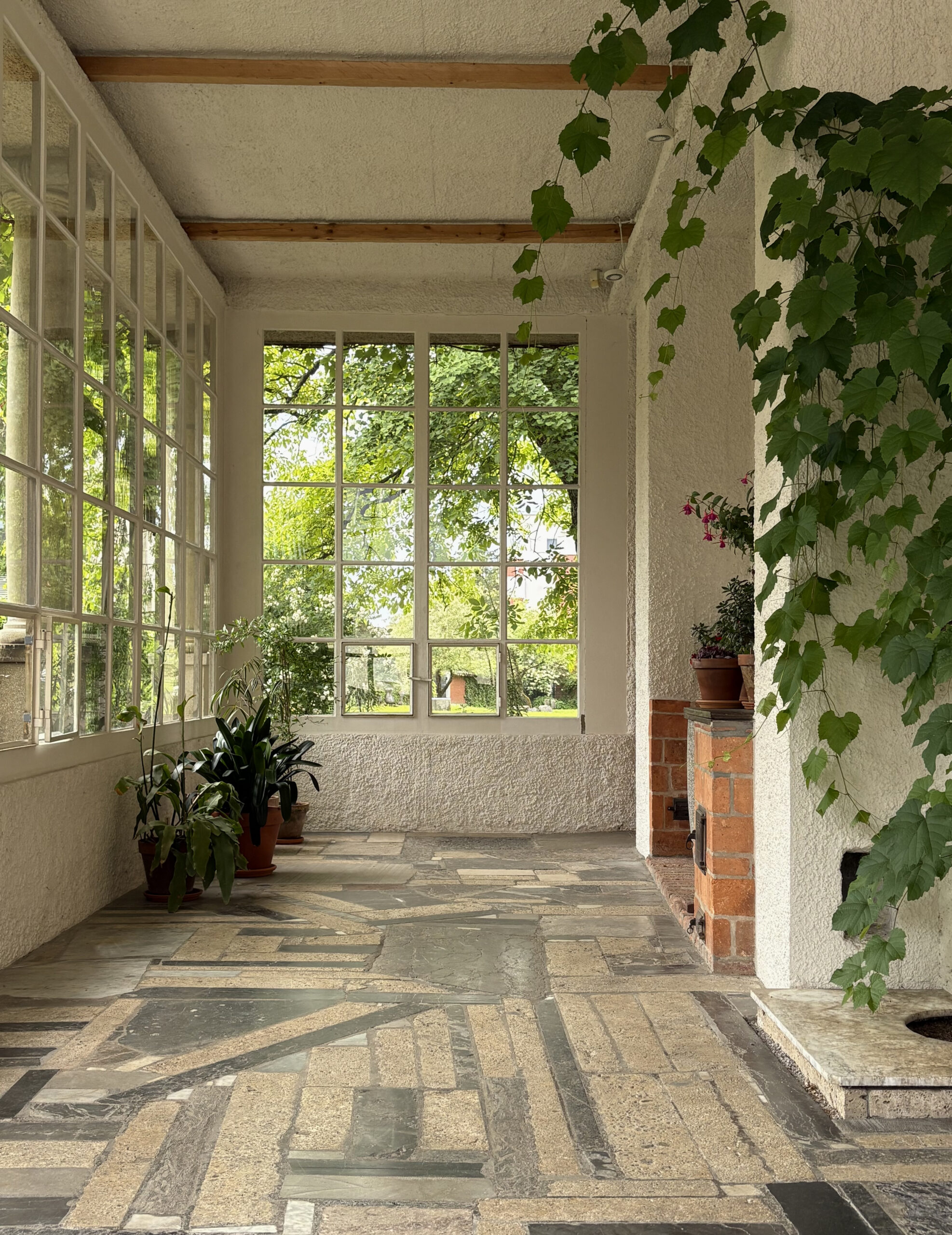
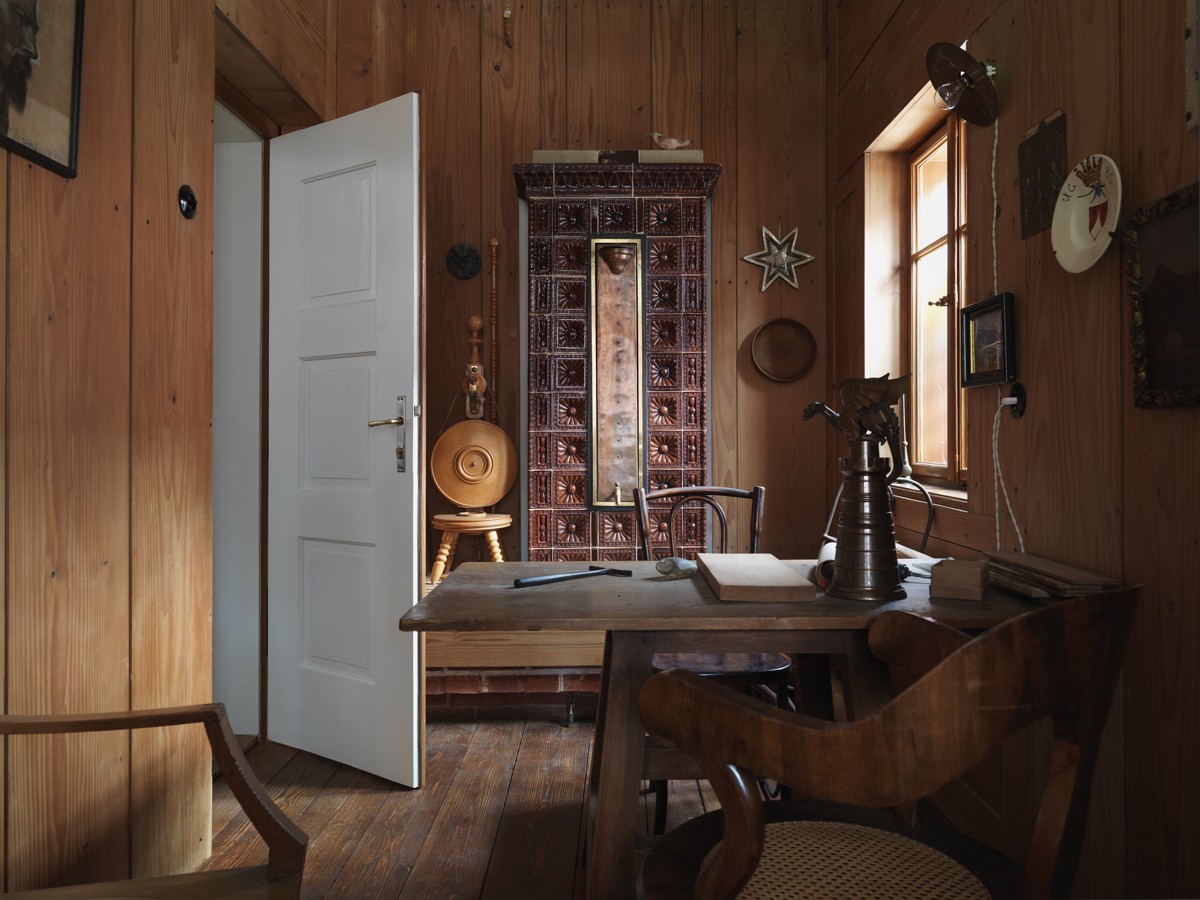
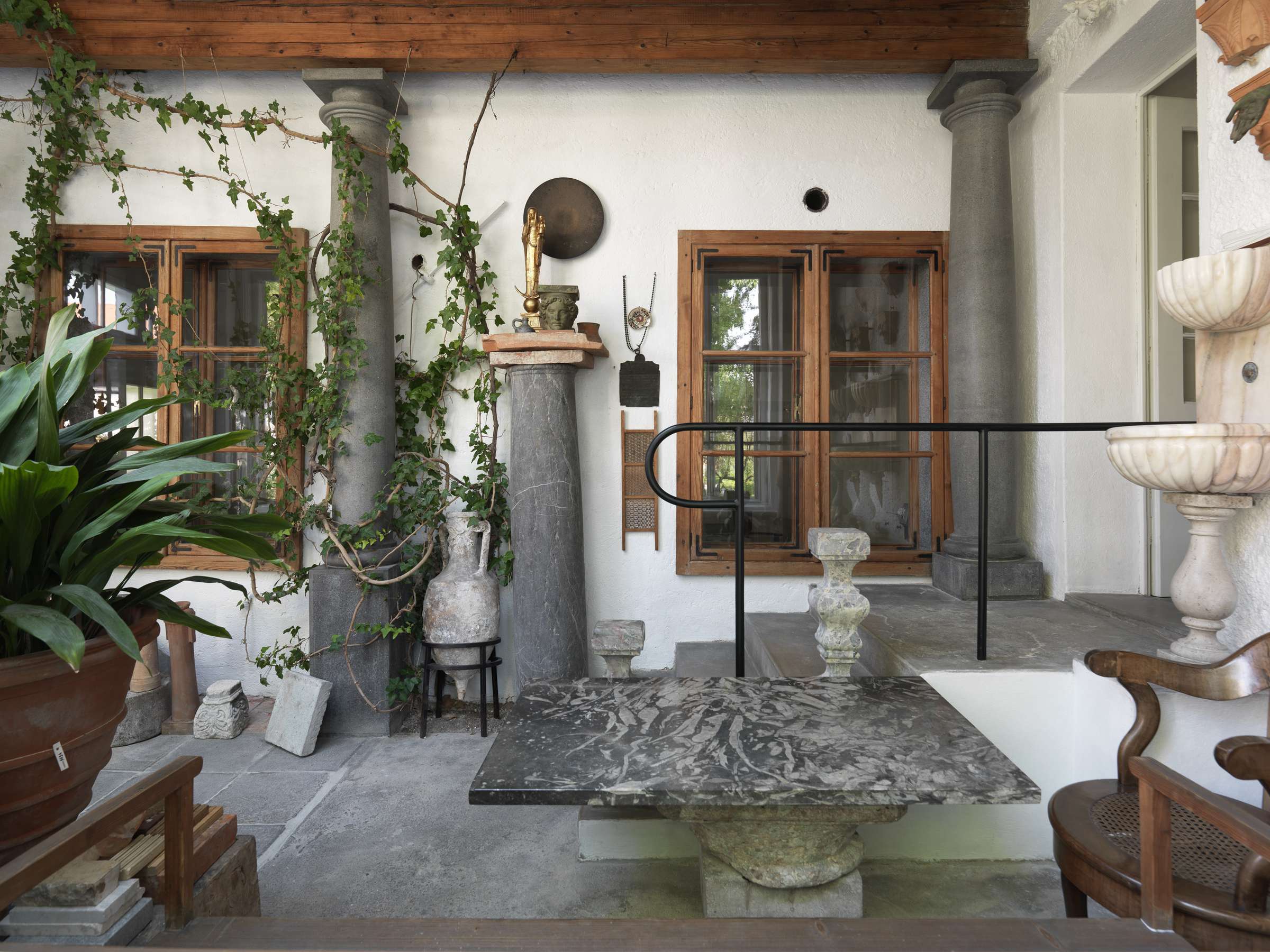
Plečnik called his house an experimental ‘mistbeet’, a testing hotbed. Ideas later realised in his civic commissions were tested at Karunova first, prototypes built into his own rooms before being carried out into the city. The 1923–25 annexe gave him two cylindrical rooms stacked one above the other. The lower one became his bedroom and drawing study, with a wooden architrave from the Etruscan tradition running across the room to divide the sleeping half from the working half. The upper round room was first his brother Janez’s piano room, then, after Janez moved out, his own drafting studio. The conservatory of 1929 hinges the two houses together, and is entered through a deliberately low door, so that whoever crosses it must bow. The floor is a veneziana mosaic of stones from nearby quarries; the four pillars in front of the glass wall were drawn first for the People’s Savings and Loans Bank in Celje. Grape vines trained along the roof came as seedlings from Emilija Fon in Kostanjevica.

The Flâneur: Plečnik House, Ljubljana

02.

The Work

When the Germans closed the Faculty of Architecture by force in 1943, his students came to draw alongside him in the upper round room. Tables, chairs and part of the library were brought from the Faculty to Karunova. His teaching was rigorous. Students began with the design of a doorknob, a candlestick, a chair, before they were allowed near a building. They learned to draw with such fidelity to his hand that they imitated his lettering and the way he held a pencil. From his work table he drew the National and University Library, the cemetery at Žale, the Triple Bridge, the colonnaded embankments of the Ljubljanica, and the Cathedral of Freedom, the parliament he proposed for Slovenia, never built. He is tied with Frank Lloyd Wright for the most works on the UNESCO World Heritage List of any architect, with eight each.

The Flâneur: Plečnik House, Ljubljana

03.

The Man

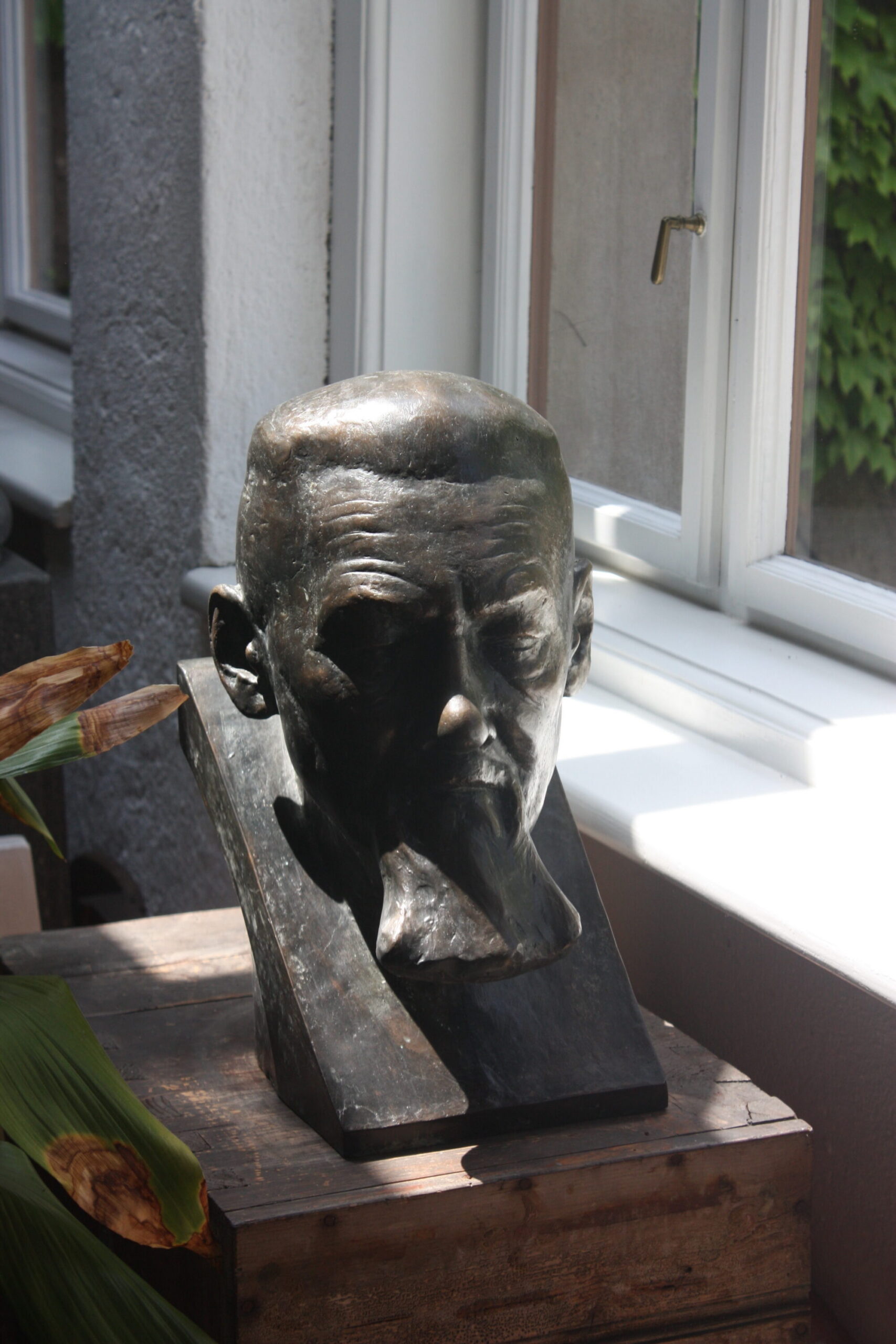
Plečnik never married. He lived alone, kept early Mass at the Church of St John the Baptist next door, and worked. He designed the eternal light that hangs in the church. The Trnovo parish priest at the time was the writer Fran Saleški Finžgar, and the two became close friends. They believed there should be no fence between good neighbours, and took the one between their gardens down, planting shrubs in its place. On the May morning we visited, antiphonal singing carried from the church into the garden. The cylindrical rooms are not domestic in form. They belong to the tholos and the early Christian baptistery. His symbolic eye was magpie-classical, gathering forms from Egyptian, Etruscan, Greek, Roman and early Christian sources. A crucified Christ by the sculptor Božo Pengov hangs above the entrance. The two cylinders are cluttered with artefacts, prototypes, books and devotional objects. The pine-clad volumes feel like early Donald Judd.

The Flâneur: Plečnik House, Ljubljana

04.

The City

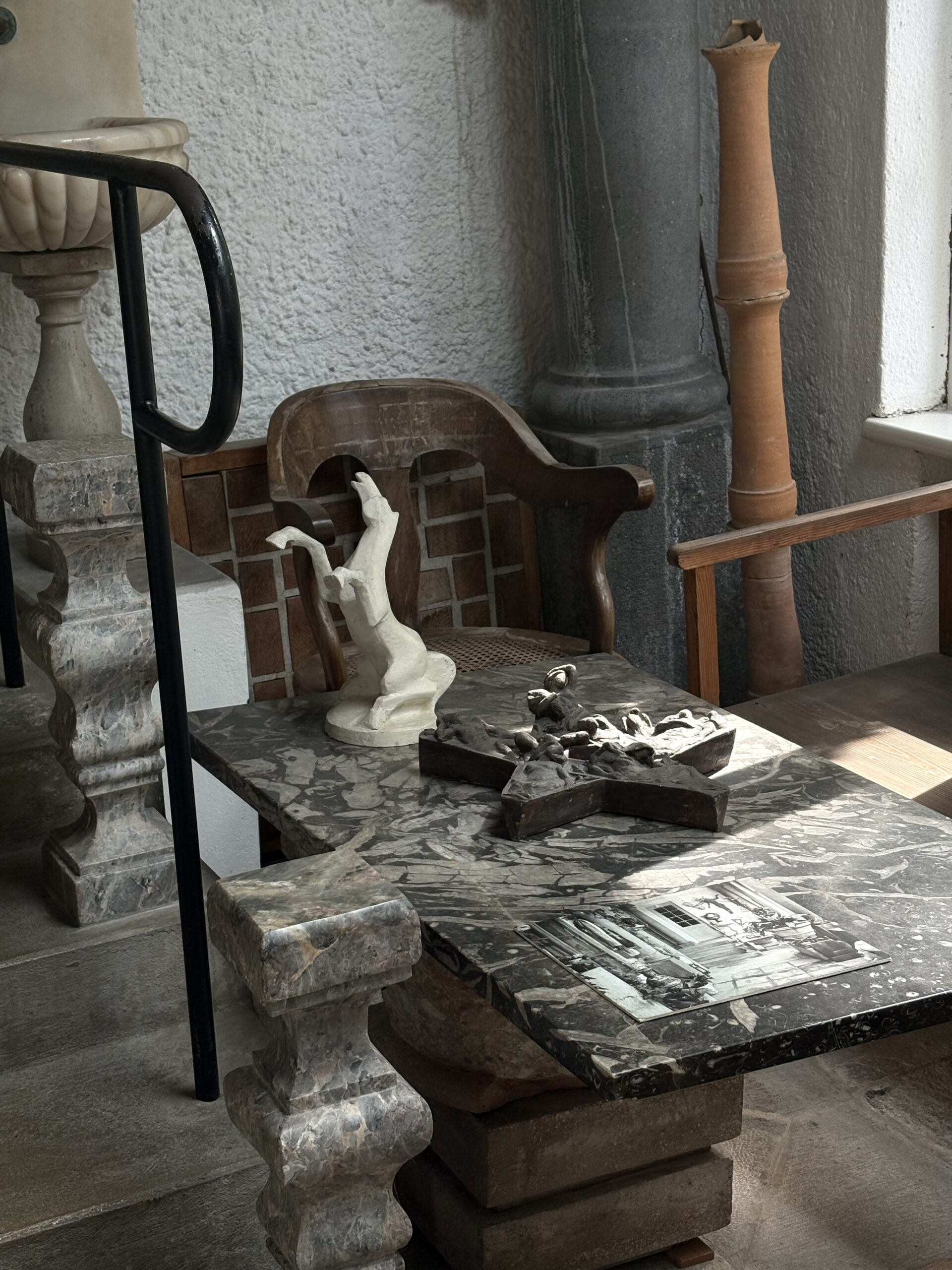
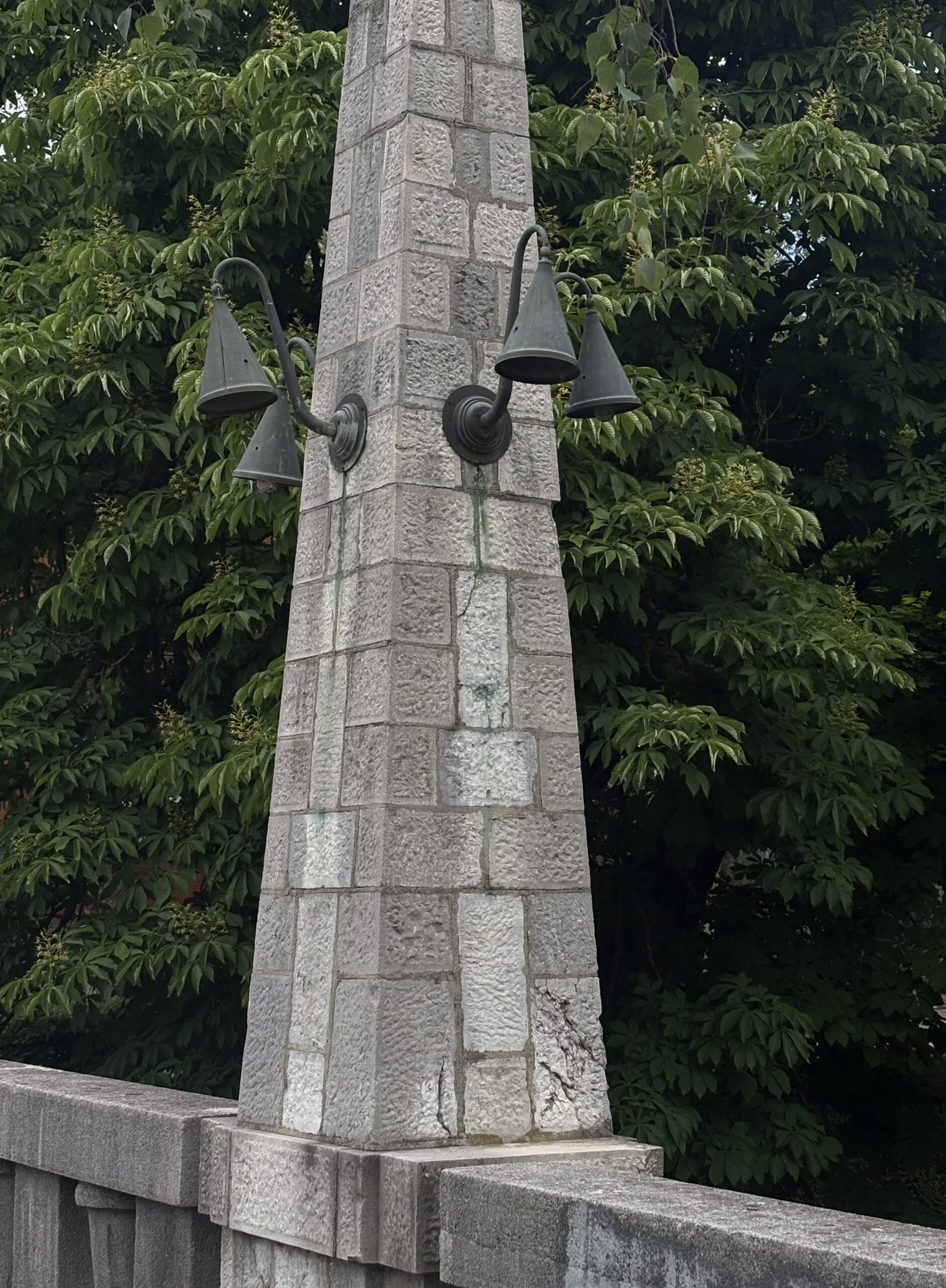
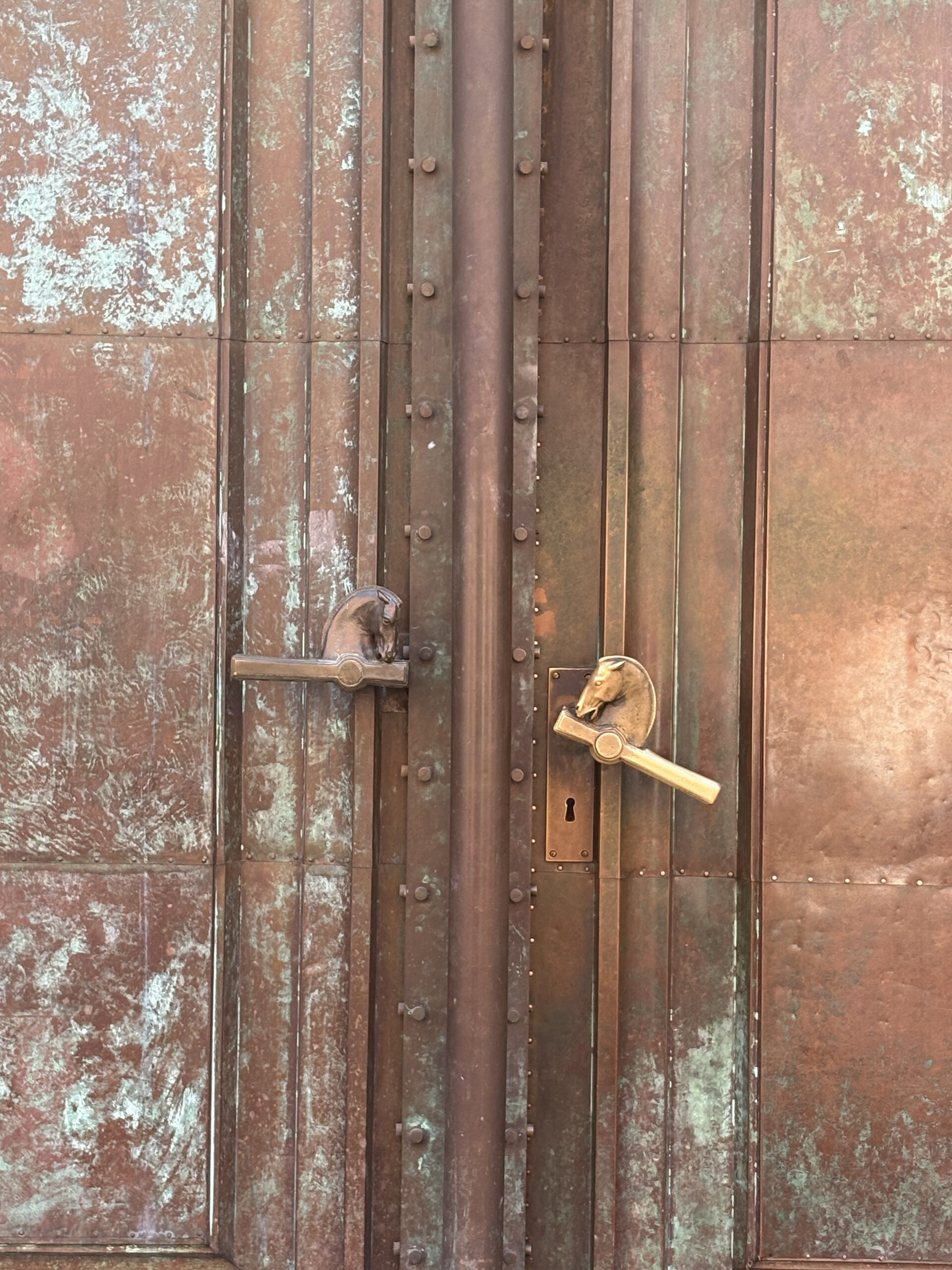
Pieces of the city are scattered through the house. The pavement at the entrance is made of concrete panels left over from his work on the Bežigrad Stadium; the bas-relief of an Atlantis figure under the tower overhang was carved by Franz Metzner, who had worked with Plečnik on the Zacherl House in Vienna two decades earlier. At the boundary with the parish garden a stone pillar from Cobbler’s Bridge stands topped with an iron cross. The horse-head door handles cast in bronze for his front door are the same ones that meet visitors at the National and University Library. Plečnik’s Ljubljana runs along two axes. The ground axis leads from the Trnovo house across the Trnovo Bridge, along Emonska and Vegova, into Congress Square and Zvezda Park. The water axis follows the Ljubljanica from the Gradaščica outflow through the city

The Flâneur: Plečnik House, Ljubljana

05.

The Legacy

Plečnik’s nephew Karel Matkovič kept the house and its contents intact after his death, and the City of Ljubljana bought it in 1970. It has been open to the public as a museum since 1974. Plečnik was awarded the Prešeren Prize in 1949 and made an honorary member of the Royal Institute of British Architects in 1954. His face was on the 500 tolar banknote; his unbuilt Cathedral of Freedom is on the Slovenian €0.10 coin. The students who drew alongside him in the round room, among them Edvard Ravnikar and Dušan Grabrijan, shaped Slovenian architecture for the next half century. The smell of pelargoniums, figs and vines still wafts out as you bow into his winter garden.

Visit
Plečnik House
Karunova 4–6, 1000 Ljubljana
mgml.si/en/plecnik-house
plecnik@mgml.si